
Body Myths
Popular discourse doesn’t always track the evidence

Part of what drew me to a career (partially) in research was my interest in understanding why people believe illogical things and do things they know aren’t good for them (e.g., smoking). I’ve long been fascinated by the gap between what people believe and what the evidence actually shows. In the last decade, with the widespread availability of social media as a source of information, my interest in the difference between evidence-based ideas and popularly accepted ones has felt only more essential. Many people will admit to getting at least some of their health and science information from the internet, much of which is not written or shared by experts. This means that those of us with relevant expertise are often just one voice among many -- and not necessarily the loudest one. In other words, those of us who have an area of expertise (in my case, an area of studying, researching, writing, and teaching about for nearly 30 years) are often considered equally qualified to provide health information to the public as people with no formal training in the topic at all.
How did we get here?
Certainly, part of why influencers and other non-experts are able to share information is because there is an audience or receptivity to the information they are sharing. In other words, people want to hear what they have to say. Often, this is because the information is presented in very black-and-white terms and lacks some of the nuance and caveats found in the real world. People are looking for direction in their lives, and it is natural to gravitate toward the clearest (or loudest!) voices. Certainty is comforting, even when it isn’t warranted.
As a researcher, I was taught to be measured and cautious in my conclusions from any given study, and to appreciate that research is a progressive, ongoing process that builds on itself. I was taught that even high-quality research is not the end-all; it may offer us important insights or information to guide our day-to-day lives, but we should use words like “may,” “seems to,” and “possibly” when describing what the evidence suggests. Science rarely offers absolute answers, but it does offer increasingly better ones over time.
I bring this nuance to my writing in The Body Image Book series, which includes books for girls, boys, and young adults. One of the features I use in all of these books I call “Myths and Misbeliefs.” This feature allows me to take a commonly held belief and debunk it with evidence – or at least offer a much more nuanced view of the belief. My goal is not simply to correct misinformation, but to help readers think more critically about the messages they encounter every day.
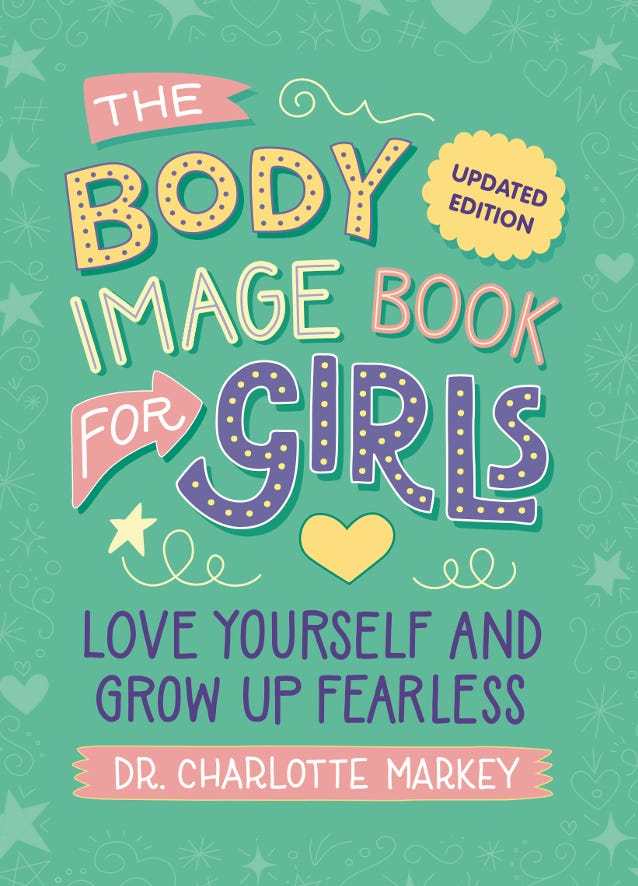
The second (New! Revised!) edition of The Body Image book for Girls: Love Yourself and Grow Up Fearless will be published in March – just days from now! Below are some of the body image myths I try to debunk in this book.
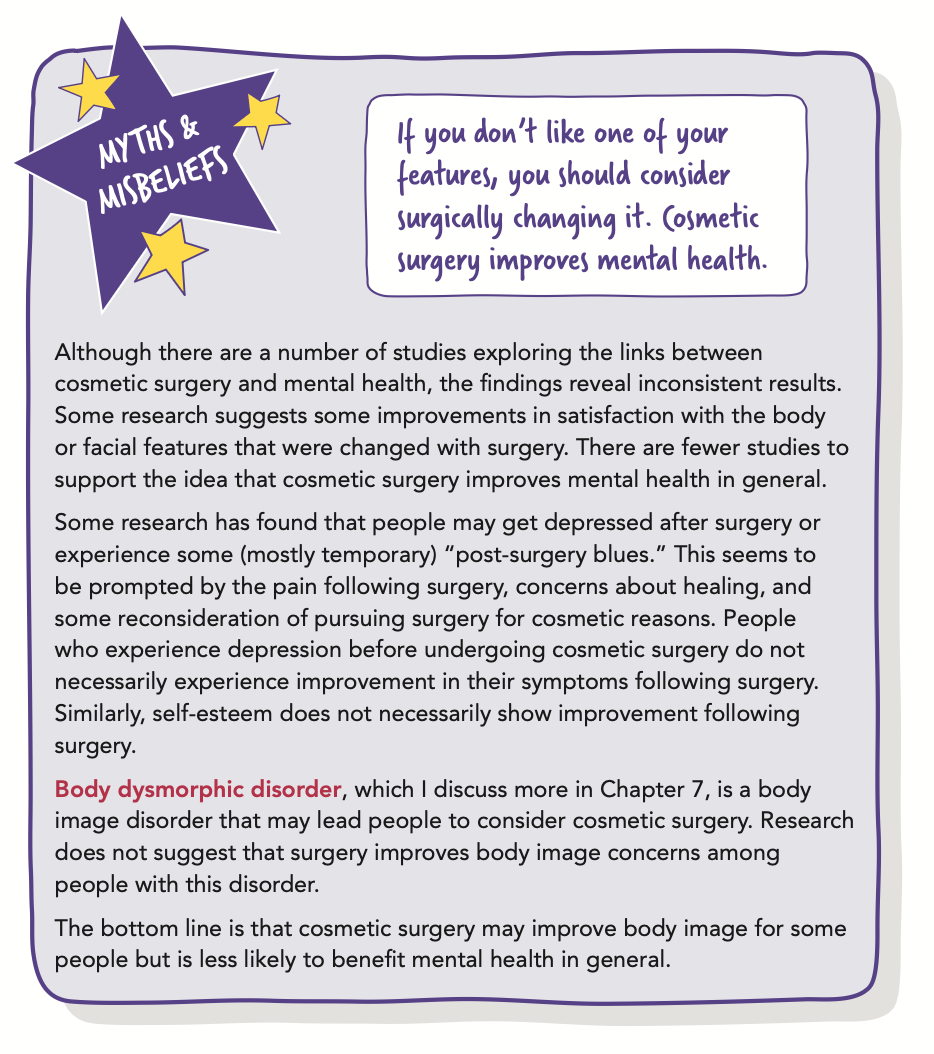
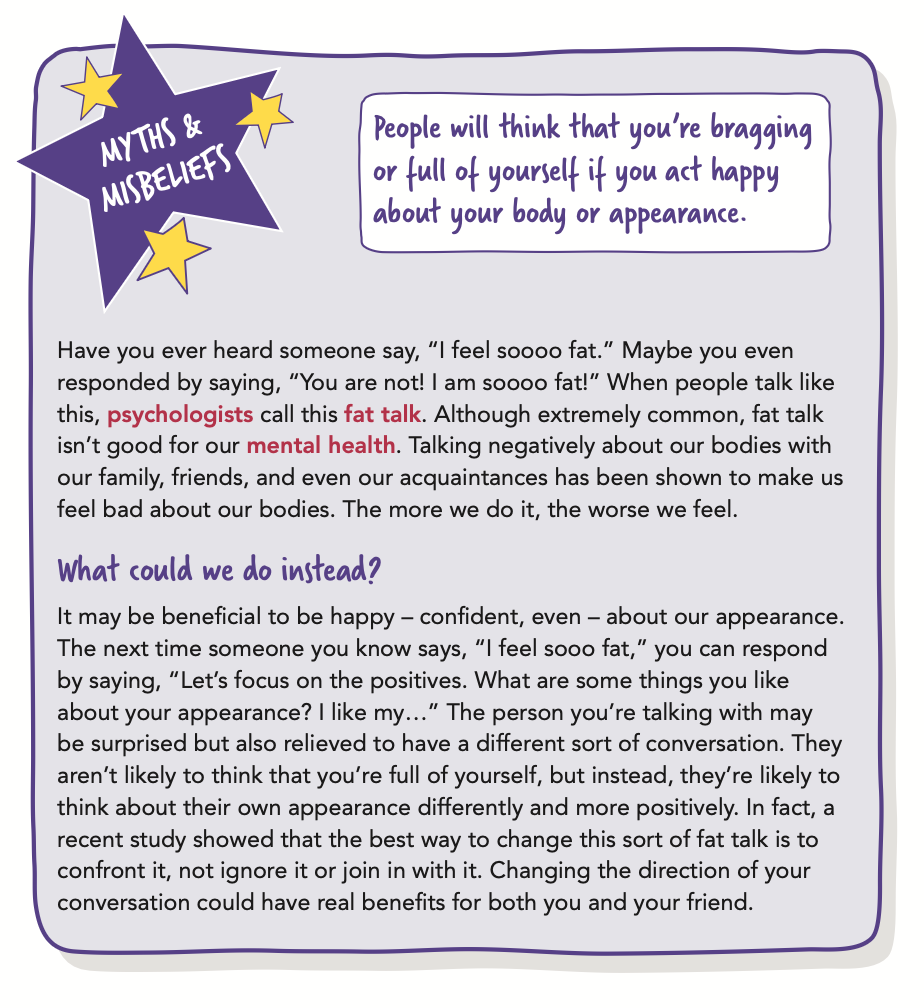
The body image books for girls and boys are intended for kids ages 9-15 years old (approximately; you know your child and what they are ready for better than anyone). They include many more myths and offer my best effort to share accessible, evidence-based information about body image and related topics, including eating, physical activity, and mental health. These are areas where popular messages are often especially misleading—and where accurate information can make a meaningful difference in how young people see themselves and their bodies.
For more information about The Body Image Books series, go to www.TheBodyImageBooks.com. For more information about Charlotte Markey, go to www.CharlotteMarkey.com.
Thank you for doing this important work, Dr. Markey. As the mother of two girls and the sister of a 46-year-old woman who has battled anorexia since her college years, I deeply appreciate your focus on evidence-based advice!